
From the Narrations
The Benefits of Ziyarah of Imam Hussain (AS)
Why do millions endure heat, distance and crowds to stand at one grave? The answer begins in the words of the Prophet’s family themselves — recorded in the earliest books of ziyarah.
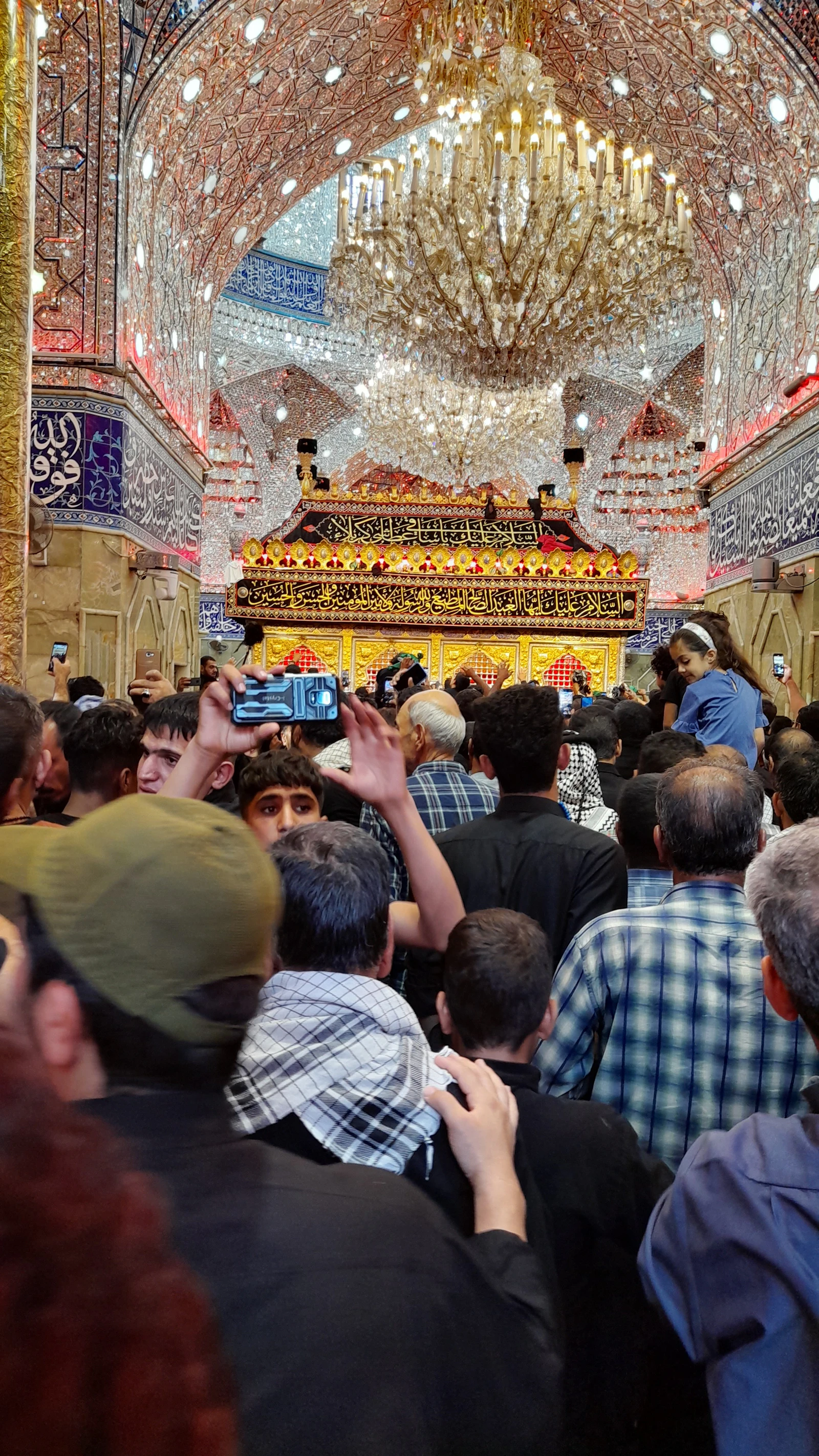
What ziyarah means
Ziyarah literally means “a visit”. In the school of the Ahlul Bayt, visiting the grave of Imam Hussain (AS) is not tourism and not mere custom: it is a renewal of allegiance to everything he stood for — prayer, justice, dignity, and refusal to bow to oppression. The narrations below describe its reward; the journey itself teaches its meaning.
A sign of the believer
“The signs of a believer are five: reciting fifty-one units of prayer, the ziyarah of Arbaeen, wearing a ring on the right hand, placing the forehead on earth in prostration, and pronouncing Bismillah aloud in prayer.” — Imam Hasan al-Askari (AS), recorded in Wasa’il al-Shi‘a and Tahdhib al-Ahkam.
Of the five signs, only one requires a journey — and the community has never stopped making it.
The reward of Hajj and Umrah
Numerous narrations in Kamil al-Ziyarat — the earliest surviving book devoted to ziyarah, compiled by Ibn Qulawayh al-Qummi (d. 368 AH) — describe the visitation of Imam Hussain (AS) as carrying rewards likened to Hajj and Umrah, multiplied according to the visitor’s recognition of the Imam’s right:
- Imam al-Sadiq (AS): “Whoever visits the grave of Hussain (AS), recognising his right, Allah writes for him the reward of an accepted Hajj and Umrah.” (Kamil al-Ziyarat, chapters on the reward of ziyarah)
- In other narrations the reward is multiplied — twenty Hajj, and more — emphasising that no worldly measure captures its worth.
- Imam al-Ridha (AS): “Whoever visits the grave of Abi Abdillah (AS) by the bank of the Euphrates is like the one who has visited Allah above His Throne.” (Thawab al-A‘mal of Shaykh al-Saduq)
Forgiveness and mercy
- Imam al-Sadiq (AS) is narrated to have said that visiting the Imam with love and recognition brings forgiveness of past sins and a fresh page. (Kamil al-Ziyarat)
- Narrations describe the angels — four thousand of them, dishevelled and dust-covered — who remain at the grave weeping until the Day of Rising, greeting every visitor, accompanying them home, and visiting them in illness. (Kamil al-Ziyarat)
- The Prophets and their successors are described as visiting the grave of Hussain (AS) — a place the heavens themselves honour. (Kamil al-Ziyarat)
Worldly blessings
The narrations do not limit the fruits of ziyarah to the hereafter. They speak of increased sustenance, extended lifespan, the relief of anxieties, and the answering of needs for the one who visits the Imam with sincerity — and of the special honour of those who feed and serve his visitors, the very act the mawakib perform along the road today.
Serving the visitor of Hussain (AS) shares in the reward of visiting him. Every volunteer pouring tea on the Najaf–Karbala road stands inside this promise.
Walking to the ziyarah
“Whoever comes to the grave of Hussain (AS) on foot, Allah writes for him, for every step, a thousand good deeds, erases a thousand sins, and raises him a thousand ranks.” — narrated from Imam al-Sadiq (AS), Kamil al-Ziyarat.
This is the heart of the Arbaeen walk: every one of the roughly 1,452 poles between Najaf and Karbala is fifty metres of remembrance.
If you cannot travel
The narrations offer a door to those unable to make the journey: perform ghusl, ascend to a rooftop or open place, face the direction of Karbala, and recite the ziyarah — “for that will be recorded as a visitation.” Distance interrupts the road, not the relationship.
Read the sources
These narrations are presented in summary. For the full texts, chains, and scholarly discussion, read them at al-islam.org:
- Kamil al-Ziyarat — Ibn Qulawayh al-Qummi (al-islam.org)
- Ziyarat Ashura — a divine gift (al-islam.org)
- Articles on Arbaeen (al-islam.org)
Note: translations are abridged for readability. Always refer to the original texts for precise wording and full context.
Next: Spiritual Resources Ziyarat Arbaeen, duas, and preparing your intention